Operations work is full of half-structured information: shift notes, customer issues, process exceptions, supplier updates, meeting actions, and procedure changes. ChatGPT Business can help teams turn that material into clearer working documents, but only if the business chooses the workflows and review rules carefully.
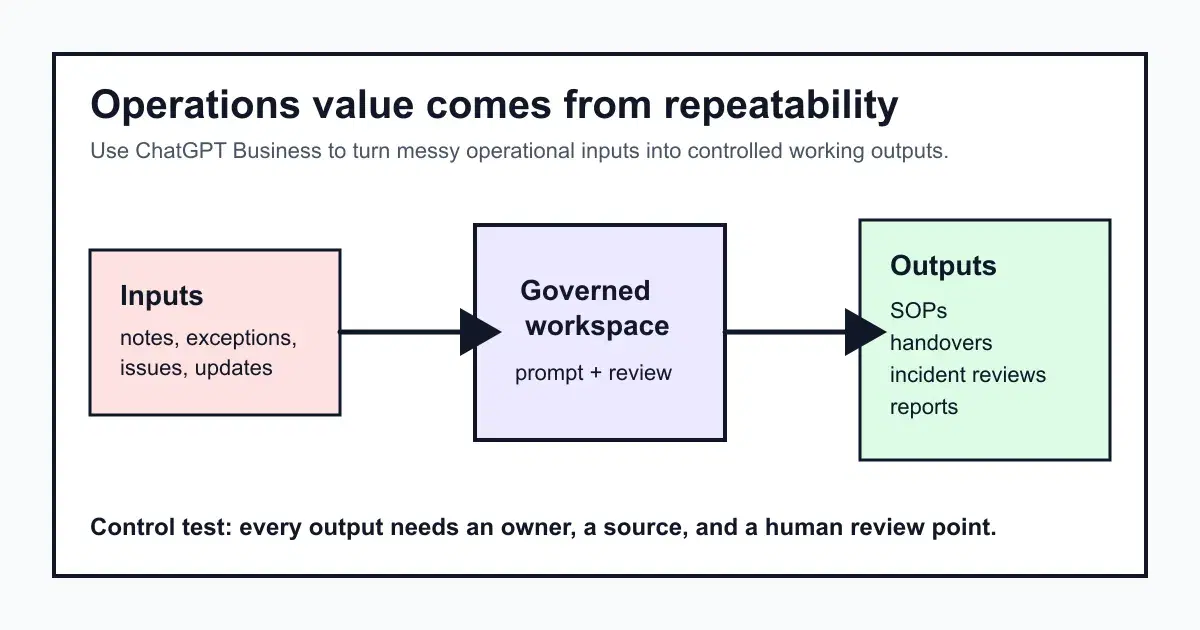
Where operations teams can start
- Procedure drafting: turn expert notes into first-draft SOPs and checklists.
- Handover quality: summarise issues, decisions, risks, and next actions.
- Incident review: structure timelines, contributing factors, and follow-up actions.
- Management reporting: convert operational detail into concise leadership updates.
The value is consistency
Operations managers should choose the first AI workflow by friction, repeatability and consequence. Good candidates happen frequently, consume measurable staff time, use information you can control and produce an output a named person can review. Avoid starting with safety-critical or irreversible decisions. Measure the before-and-after process: preparation time, rework, handover defects, missed actions, escalation rate and management reporting effort. The purpose of a governed workspace is to make the improved method repeatable across the team rather than create another one-off AI experiment.
The operating controls that matter
Next step
Plan a governed ChatGPT Business rollout
Book a call to scope workspace ownership, starter workflows, and governance for your team.
Book a rollout call- Source control: record which notes, logs, or procedures informed the output.
- Review owner: name the person accountable before a procedure or report is used.
- Exception handling: escalate safety, compliance, customer, or financial commitments.
- Feedback loop: improve the prompt and template after each real operational use.
The best first projects are usually concrete and visible: a cleaner shift handover, a better issue summary, a first-draft SOP, or a management report that takes minutes rather than hours to prepare. Those examples create confidence because managers can compare the old way and the new way side by side.
AI Build Group helps operations leaders select practical use cases, build starter workflows, and measure whether ChatGPT Business is improving speed, clarity, and control. Ask for a practical ChatGPT Business rollout plan if operations is where you need the first proof of value.