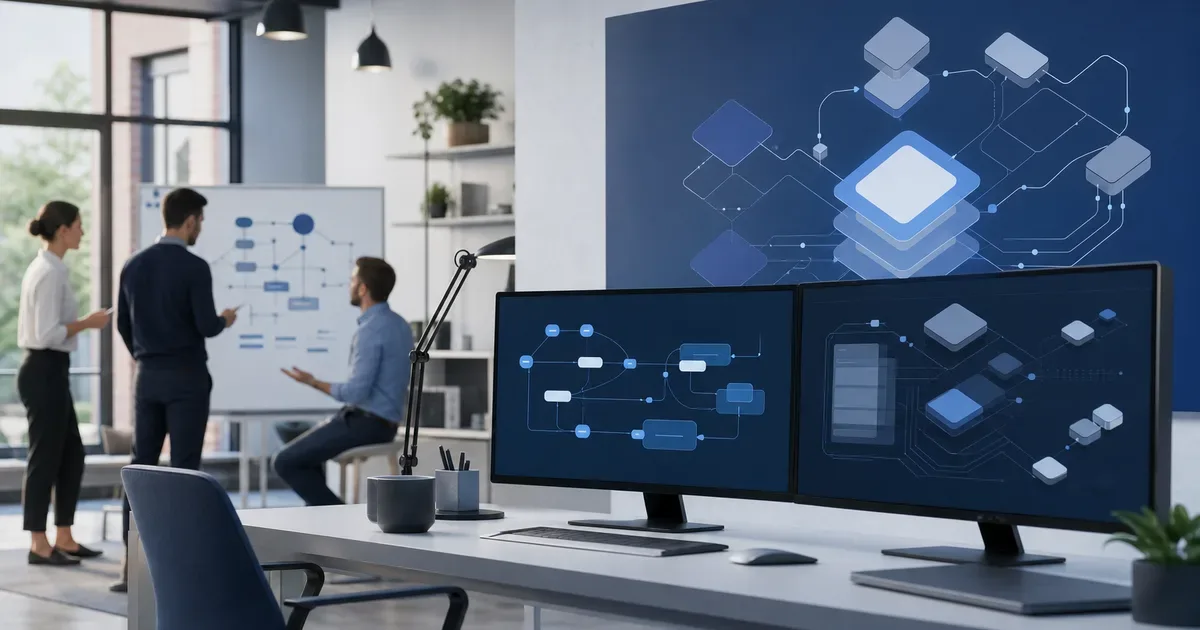
Asketta is AI Build's survey and questionnaire product direction. The design brings structured questionnaires, AI-assisted interview flows and report generation into one workflow, with a focus on making responses useful rather than merely collecting them.
This AI Build engineering case study explains the product decisions behind [Asketta](https://asketta.com) and what businesses can learn from the approach. It is a description of the architecture and design choices, not a claim that every planned feature is already released.
Why did we develop Asketta?
Conventional forms collect answers but often leave the organisation with the difficult work of interpreting response patterns, following up and producing a credible report. Poor question design can also distort the evidence collected.
How did we structure the platform?
The proposed architecture separates questionnaire definitions, branching logic, response storage, AI interview prompts and downstream reporting. OfficeMaker document workflows can transform structured responses into reports without burying the raw answers inside free-form prompts.
Which design decision mattered most?
Survey data should remain attributable to the question and consent conditions under which it was collected. AI-generated interpretations should be distinguishable from the original responses.
What were the engineering trade-offs?
An engaging AI interview must not lead respondents, invent responses or weaken respondent privacy. Product design therefore needs clear limits on prompting, data access and consent.
What can other teams learn from this build?
The value in AI-assisted research comes from better question design, traceable answers and practical follow-up, not just a chat-style interface.
Learn more: Explore AI Build's automation work.
Editorial note: this article describes product architecture and implementation approach; it does not claim unverified results, customer numbers, independent certification or measured performance improvements.