A finance director pastes a rough revenue scenario into a consumer AI assistant before the board pack goes out. No ticket. No data review. The spreadsheet stays in SharePoint, but the strategic question leaves the business. Multiply that moment across sales, HR, operations, and engineering: AI is not a future initiative. It is a present habit.
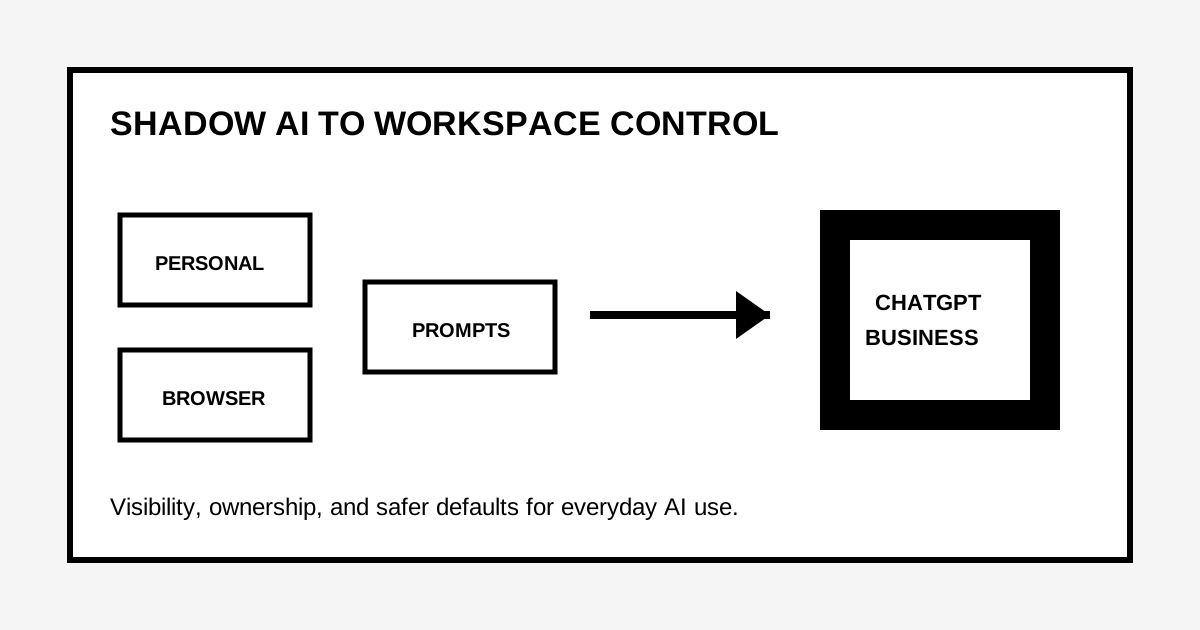
This is the first piece in our series on shadow AI—each instalment stresses a different failure mode. Next we cover when personal accounts become a compliance and security crisis; the companion essay argues why blanket bans accelerate the problem.
Shadow AI awareness starts with an uncomfortable truth
Executives still ask “when should we adopt AI?” while their teams answer that question every Monday morning without waiting for permission. Shadow AI is not a fringe behaviour reserved for tech startups; it is the path of least resistance whenever sanctioned tools feel slow, unclear, or absent. If your AI strategy begins with procurement decks instead of telemetry on actual behaviour, you are managing theatre—not usage.
This article is written for owners who cannot afford reputational surprises, IT leaders tired of discovering tools during incidents, and security stakeholders who need defensible answers—not heroic improvisations after the fact.
Here is the blunt version your leadership team may not want on a slide—but needs on record: shadow AI awareness is not about catching individuals; it is about admitting that productivity incentives beat policy purity when tools are one click away. The moment you accept that, your question changes from “how do we stop this?” to “how do we channel it without lying to ourselves?” That reframe is the difference between governance that survives scrutiny and governance that collapses the first time a regulator asks a precise follow-up.
If you are still treating AI like an optional experiment, you are negotiating with culture using PowerPoint. Culture already voted with its calendar: drafting happens faster with assistance, research happens wider with summarisation, code moves quicker with explanations. Your organisation did not “wait for strategy.” It improvised strategy inside browser sessions—quietly, unevenly, and without the instrumentation you rely on for every other critical workflow.
Why “no formal programme” no longer means “no AI”
- Velocity beats paperwork: teams ship faster with drafting, debugging, and summarisation helpers, so adoption spreads wider than any cataloguing exercise.
- Shadow AI hides in plain sight—nested inside SaaS workflows, personal devices, and contractor laptops where traditional endpoint inventories lose signal.
- Without an organisational workspace, every clever prompt becomes an informal exception to policy—too small to escalate, too frequent to ignore at scale.
- Leadership dashboards show zero vendor spend while operational reality shows daily reliance on generative assistance—creating a fatal honesty gap with boards and insurers.
- Procurement cannot negotiate what it cannot see; shadow usage fragments terms of service and retention assumptions across dozens of invisible subscriptions.
None of this implies malice. It implies rational behaviour under pressure. Your best people are measured on outcomes, not on how faithfully they route every question through a committee. Shadow AI awareness means measuring that rational behaviour honestly—then designing standards that respect it. Anything else is cosplay.
From an executive vantage point, the uncomfortable implication is strategic: if adoption is already distributed, your competitive posture on AI is not defined by the elegance of your roadmap slide—it is defined by whether you can operationalise controls fast enough to prevent unforced errors while still capturing productivity gains. Companies that solve that tension early pull ahead; companies that deny it spend quarters arguing about definitions while their teams quietly optimise elsewhere.
Security, compliance, and the leakage you cannot spreadsheet away
Partner offer
Request your ChatGPT Business discount code
UK OpenAI SMB Channel Partner pricing with complimentary setup on qualifying purchases.
Get partner pricingSecurity teams were trained to guard files, endpoints, and ingress traffic. Shadow AI asks a ruder question: what happens when sensitive fragments—customer identifiers, strategy narratives, source code—cross into environments your DLP rules never classified because the payload looked like casual text?
Compliance is not sympathetic to good intentions. Regulators, enterprise customers, and cyber insurers increasingly expect documented supervision of AI-assisted work—not a shrug and a slide that says “we’re evaluating vendors.” When usage is personal and scattered, you inherit a forensic nightmare: who prompted what, under which contractual regime, and whether training data policies match your own obligations? For a dedicated treatment of identity and audit gaps, see shadow AI compliance when everyone uses personal accounts; if leadership is tempted to prohibit tools outright, read why bans fuel underground usage.
Note what makes this different from classic shadow IT: the payload is language. Language travels light. It copies easily. It hides inside legitimate productivity flows. That means your controls cannot rely only on blocking binaries or domains; they must grapple with how humans think under deadlines—which is exactly why governance conversations belong at executive level, not buried as a footnote in an IT refresh plan.
For security stakeholders, the challenge is not theoretical “model risk.” It is concrete accountability: can you explain, with a straight face, how sensitive categories of information are prevented from entering unmanaged contexts—without pretending employees never copy/paste? If the honest answer is “we hope,” your organisation is running an unpriced gamble.
- Data leakage risk rises when prompts become the unmonitored channel—especially under pressure near quarter-end.
- Audit trails weaken when identities, retention, and admin boundaries live outside corporate SSO.
- Incident response slows when “which AI?” is the first question nobody can answer quickly.
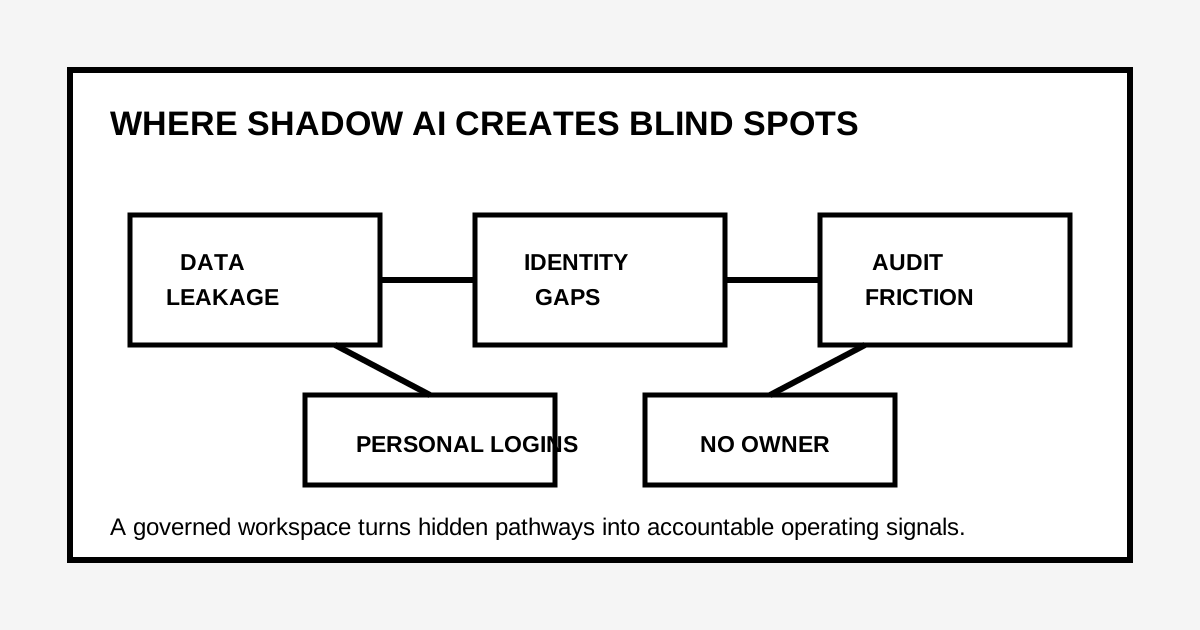
If you want a single sentence for the board: unmanaged AI usage converts informal habits into formal liability—slowly, then suddenly. The “slowly” phase feels deniable because incidents are rare and diffuse. The “suddenly” phase arrives as a customer audit, a regulator letter, or a headline you cannot fully control. Shadow AI awareness is about intervening while you still have options besides apology tours.
Why this is urgent right now
Generative AI crossed the usability threshold that turns experimentation into muscle memory. Employees do not debate whether to use assistance; they debate which tab opens fastest. Meanwhile, external scrutiny is sharpening: customer questionnaires, renewal audits, and regulatory guidance all assume AI is already touching decisions—even if your policy PDF says otherwise.
The organisations that win will not be the ones that issued the sternest bans; they will be the ones that acknowledged reality early and replaced chaos with an accountable platform before a headline forced their hand.
ChatGPT Business: replace shadows with something you can govern
ChatGPT Business exists because enterprises needed the speed of consumer-grade assistants without surrendering administration, organisational boundaries, and clearer workplace-oriented deployment patterns. It is not magic—it is alignment: give teams the surface they already want, owned the way you already buy serious software.
As an OpenAI SMB Channel Partner, AI Build Group helps UK organisations move from denial to deployment without dumping complexity solely on internal IT queues: stakeholder framing, rollout sequencing, and pragmatic governance that still ships.
This is the executive trade you are actually making: you are exchanging invisible flexibility for visible control—not because you dislike flexibility, but because enterprises cannot insure, audit, or scale what they cannot name. ChatGPT Business is the naming convention your risk committee has been missing: a serious tier designed for workplace deployment rather than weekend experimentation.
What to do next—before your next audit does it for you
What you gain from shadow AI awareness
Your team may already be using AI through personal accounts. See the risk, the leadership test, and the ChatGPT Business route back to control.
Claim your free seatStop debating whether shadow AI exists; assume it does and measure it honestly. Then route demand to ChatGPT Business so leadership can speak truthfully about controls instead of hoping discipline holds in private browser sessions.
Request partner pricing and your offer code from AI Build Group today—put invisible adoption on the record, on purpose.