In a leadership meeting, a COO challenges the need for “another chat subscription.” Legal compares consumer use with workplace obligations: retention posture, administration, and accountability. The room shifts. This is not vanity software; it is productivity with governance attached.
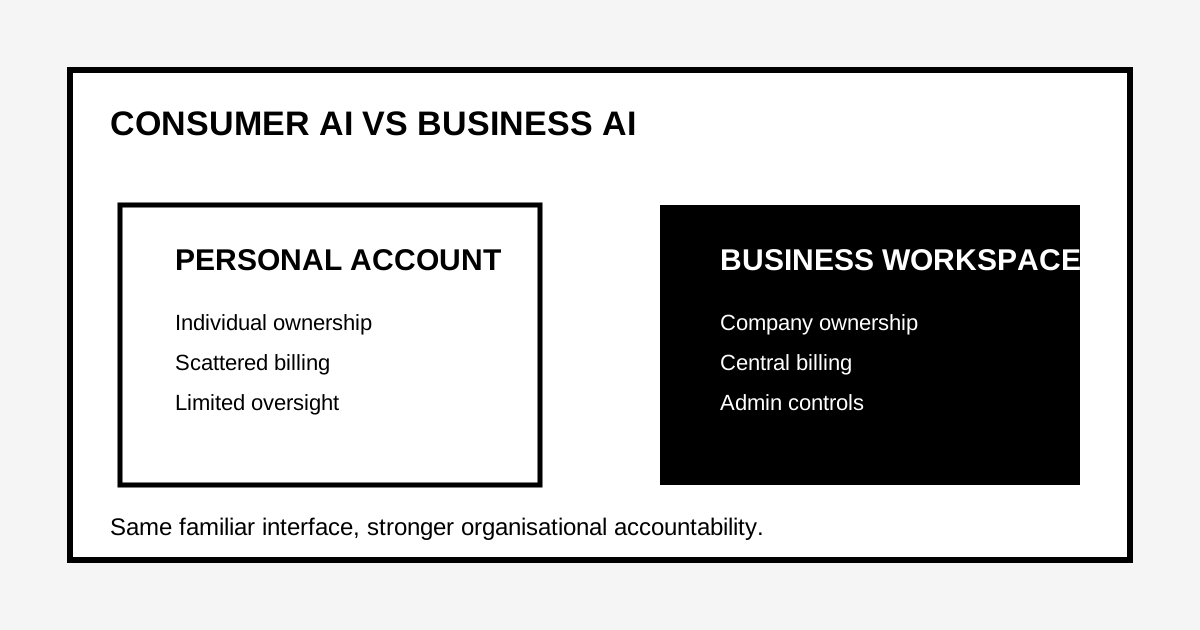
Same habits, different obligations
Employees experience ChatGPT as an interface. Leadership must experience it as infrastructure—because once AI touches customer narratives, financial narratives, or engineering output, assurance requirements change. Consumer tiers optimise individual convenience; business tiers exist because enterprises cannot run on heroic trust alone.
Owners, IT leaders, and security stakeholders share one inconvenient reality: equivocating between tiers invites false confidence when questionnaires and incidents arrive.
If that feels harsh, good—it is supposed to. ChatGPT Business versus consumer AI in the workplace is not a religious debate about features; it is a procurement and assurance debate about whether your organisation wants traceability. Traceability is boring until it is the only thing that matters.
Employees will experience this shift as “the same tool, less sketchy.” Leadership should experience it as “finally consistent with how we govern serious systems.” Those two sentences should coexist; if they do not, your rollout messaging needs work.
Problem breakdown: why mixing tiers fractures organisations
- Operational ambiguity: half the company assumes “we use ChatGPT” while governance debates which ChatGPT that sentence meant.
- Financial noise: shadow expenses on corporate cards obscure true cost and negotiating leverage.
- Onboarding inconsistency: HR and IT cannot provision guidance without a named organisational pattern.
- Vendor posture mismatch: consumer assumptions collide with workplace duties at scale.
- Executive storytelling breaks: leaders promise controls engineering cannot trace to identities.
Mixed tiers produce mixed mythology: some leaders talk about “enterprise AI” while teams operate on consumer assumptions. Auditors love mixed mythology—it gives them easy findings. Customers love it less.
Financially, fragmentation is leakage by another name: you pay multiple ways—duplicate subscriptions, duplicated risk, duplicated training thrash, and duplicated incidents born from inconsistent habits.
Security, compliance, and data leakage in plain terms
Partner offer
Request your ChatGPT Business discount code
UK OpenAI SMB Channel Partner pricing with complimentary setup on qualifying purchases.
Get partner pricingAssuming parity between consumer and workplace deployments is how audits turn painful. Not every difference is visible to end users—but risk teams are paid to care about invisible seams: where data flows, how accounts lifecycle, and what you can prove afterwards.
Data leakage risk escalates when convenience encourages pasting context into the wrong tier—because the interface feels identical even when obligations are not.
Security teams should push leadership past superficial comparisons: “it looks the same” is not an assurance argument. Compliance teams should translate tiers into obligations your organisation already understands: retention, supervision, lifecycle management, and supplier diligence.
Owners should watch for the seductive trap of saving money on the wrong line item: under-buying assurance is expensive—just on a different ledger, usually labelled reputation, renewal concessions, or emergency consulting.
- Retention and supervision narratives must match how work is actually performed—not how procurement wishes it were performed.
- Commercial usage at scale increasingly belongs on organisational terms designed for that reality.
- Continuity suffers when critical workflows depend on personal accounts that walk out the door.
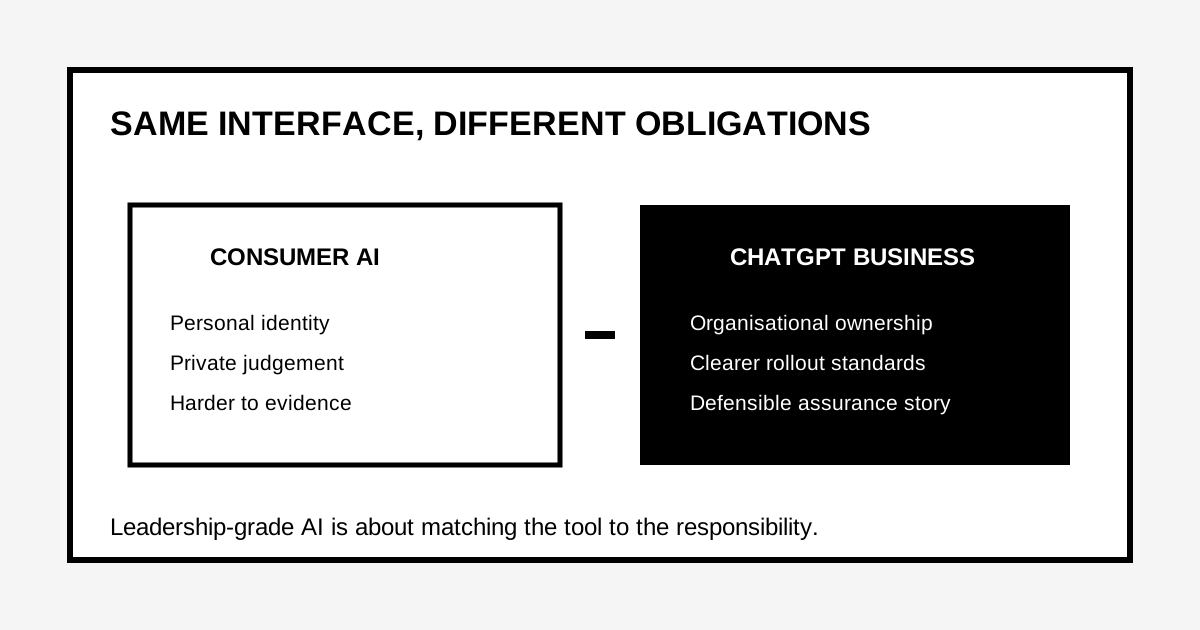
When you stack these points, the executive takeaway is blunt: ChatGPT Business is how you align narrative and mechanics. Consumer habits can persist culturally; organisational mechanics must catch up—or your assurance story will remain permanently out of sync with reality.
Why leadership must decide now—not after the first hard question
Customer RFPs, insurer questionnaires, and internal audit plans are all trending toward explicit AI hygiene. Waiting does not reduce adoption; it reduces your ability to narrate control credibly while adoption accelerates anyway.
The provocative truth: your organisation already chose ChatGPT culturally. The only strategic choice left is whether procurement and security get a seat at that decision retroactively—or upfront.
Waiting does not preserve optionality; it preserves ambiguity—and ambiguity is what shadow adoption eats for breakfast. Deciding now is how you convert messy enthusiasm into something fundable, auditable, and scalable.
Also recognise the political reality: the first hard question will arrive from someone powerful—a major customer, an insurer, an activist board member, or an internal whistleblower pathway. You want your answer to reference a standard and a deployment plan, not a crossed-fingers policy.
ChatGPT Business as the leadership-grade answer
Standardising on ChatGPT Business aligns familiar productivity with organisational administration—so IT can deploy patterns instead of policing guilt, and security can reference a serious vendor relationship instead of shadow folklore.
AI Build Group helps UK organisations adopt with partner-led clarity—so teams keep speed while leadership keeps defensibility.
Standardising on ChatGPT Business is how you stop improvising assurance. It does not remove judgement; it concentrates judgement into places where judgement belongs—policy boundaries, onboarding design, monitoring philosophy—rather than scattered across consumer accounts nobody catalogued.
Partners exist because speed without scaffolding fails in messy human organisations. AI Build Group’s job is to compress time-to-credible-deployment: fewer circular meetings, fewer false starts, more clarity for stakeholders who cannot afford another vague quarter.
Make the tier match the responsibility
What you gain from ChatGPT Business
Explore the differences between ChatGPT Business and consumer AI in the workplace, and understand the implications for leadership.
Claim your free seatStop renting assurance gaps one consumer login at a time. Choose an organisational standard your stakeholders can explain under pressure—and resource onboarding accordingly.
Request ChatGPT Business partner pricing and your offer code via AI Build Group today—close the consumer-workplace divide before it closes deals for you.
If you remember nothing else: ChatGPT Business versus consumer AI in the workplace is not about snobbery about tiers—it is about refusing to run modern intelligence on amateur governance rails. Upgrade the rails. Keep the speed.
One practical closing assignment for leadership teams: write the five-sentence version of your AI posture as if a sceptical customer asked—then check whether every sentence maps to an artefact you can produce on demand (training logs, admin boundaries, incident guidance). If a sentence relies on hope, rewrite it until it relies on ChatGPT Business—or delete it before someone else deletes your credibility.